
The Floppy Disk - one step closer to death

The old dinosaur of the tech world comes a little closer to finally popping its clogs.  Sony, pretty much the last company still manufacturing floppy disks will stop from March of next year.

In various forms the old floppy disk drive (often abbreviated to FDD) has been around since around 1971.  It started then with IBM’s 8” disk/drive.  Shugart (who I think became Seagate?) brought out the 5.25” disk/drive around 1976.

HP brought out the 3.5” disk/drive in 1982.  This format had the longest life and one still encounters them from time to time.  I recently had to use one to load a RAID driver onto a PC.
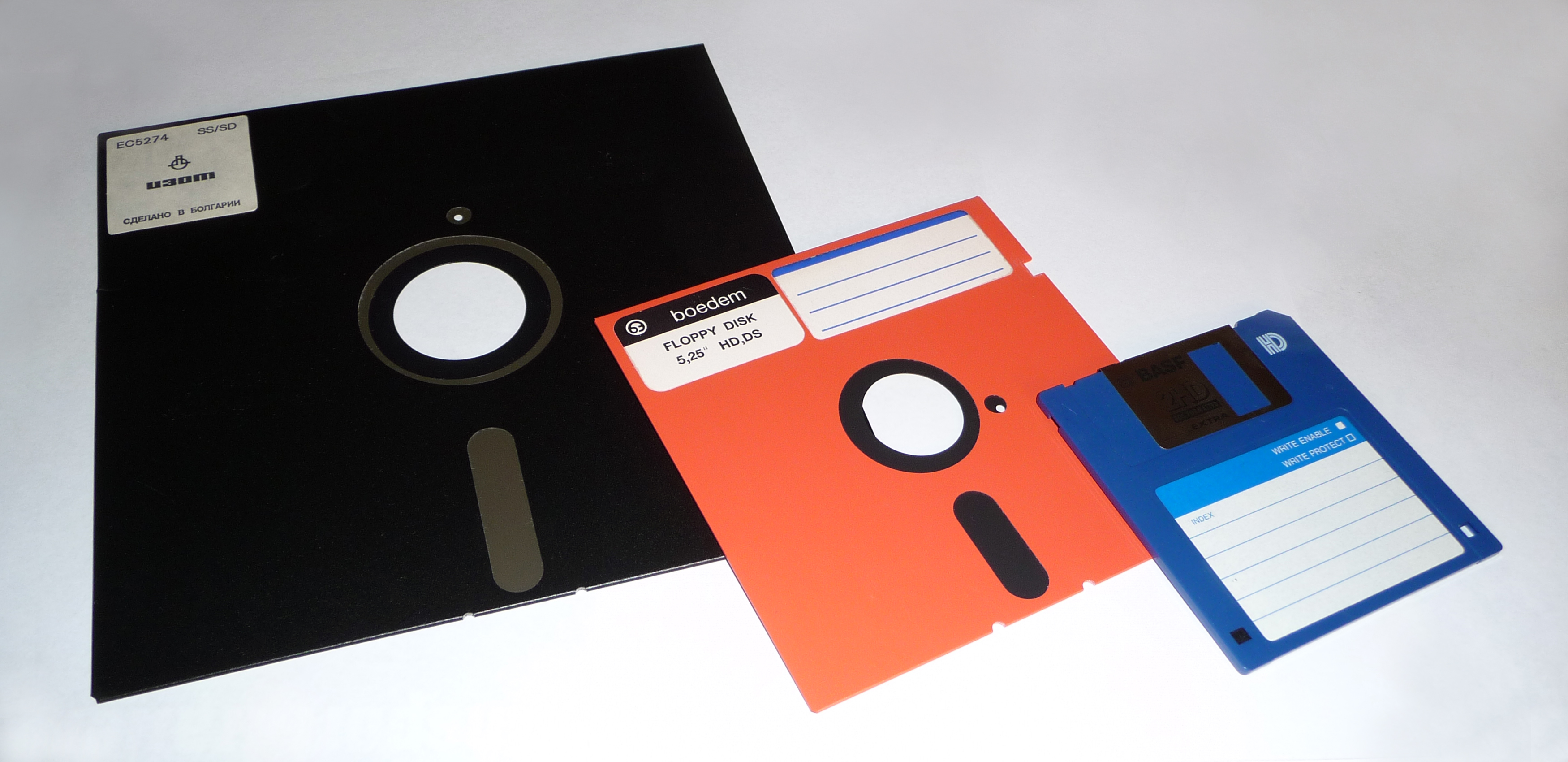
File:Floppy disk 2009 G1.jpg

In some respects the 3.5” disk was fantastic: light, small, fairly physically robust, cheap, decent storage capacity for the ‘80s.  However, in other respects it was diabolical: magnetically sensitive, sensitive to dust, it wore down over time, by the mid to late ‘90s it was annoyingly short on capacity.

If you want to know more have a look at the Wikipedia entry here:  http://en.wikipedia.org/wiki/Floppy_disc

For more info also have a look at the Engadget entry here:  http://www.engadget.com/2010/04/26/sony-shutting-down-japanese-floppy-disk-sales-by-march-2011-kil/

Comments

Popular posts from this blog

Resolve WSUS Server issue that gives "Cannot save configuration because the server is still processing"

This is a pretty infuriating error and can sometimes crop up as a result of running a "wsusutil reset" command. First of all, give the server some time, and then a bit more...  but you've probably already done this. These steps may help to resolve the situation: - Install Microsoft SQL Management Studio (free download) - Run SQL Management Studio and start to connect to the WSUS database - Enter this in the "Server Name" box:  \\.\pipe\MICROSOFT##WID\tsql\query - Expand the "Databases" tree - Right-click on "SUSDB" and choose "New Query" - Paste this query in:     UPDATE tbSingletonData     SET ResetStateMachineNeeded = 0 - You should see a message like "1 row affected", which is good - Quit SQL Management Studio - Open "Services" and restart the "WSUS Service" - Now, open WSUS

Re-arm ESXI Evaluation License

Needed to get a little more time out of my ESXI trial so that I could migrate it to Hyper-V. This pair of commands came in very handy and gave another 60 days: rm -f /etc/vmware/vmware.lic /etc/vmware/license.cfg reboot To use them, you need to: Put your ESXI server into Maintenance Mode Enable Secure Shell access (SSH) Enable Console Access Then ssh to the server (in Windows 11 you can just type ssh username@serveripaddress and then enter password) Otherwise, you could use something like PuTTY ( https://www.putty.org/ ) Hope this helps.  

Turn off "BitLocker waiting for activation"

This can be a pain when attempting to "sysprep" a PC's storage drive (usually the C: drive) or take an image of it using something like Acronis SnapDeploy.  In such cases, the software will complain about this BitLocker status. I keep forgetting about this every time I go to take an image! It isn't immediately obvious how to get around the issue... do you go for "Turn on BitLocker" and then turn if off when it has finished encrypting the drive?  Well you probably could if you had the time, but there's an easier way. Using the "manage-bde" tool via an administrative command line gives lots more options, and allows this to be turned off. Tip: handy way to open an admin command line is to hit  W  + R, then type "cmd" and then hit CRTL + Shift + Enter. Typing "manage-bde -status" will show you some more detail, but the command you need is: manage-bde -off c: This may take some time, depending on how much of the drive has already...